
How Bench Warrants Work in Freeborn County
Bench warrants in Freeborn County grow out of a case that is already open. An obligation goes unmet. The judge then signs an order from the bench. Nothing about it is a new charge; it is the court's tool for pulling a person back in front of a judge, and the file stays open the whole time. That distinction matters more than anything else here. Because the warrant sits inside an existing case, the first move is reading the file to see what the order actually authorizes.
Freeborn County Bench Warrant Triggers
Triggers for a Freeborn County bench warrant vary by case, but the common ones fall into a short list, and the docket language controls.
- A missed criminal or traffic appearance.
- No response to a citation or summons.
- An unmet release condition or court-ordered requirement.
- An unpaid obligation the court tied to a warrant.
- A missed review, probation, or sentencing event.
Note: These are categories, not findings about any person; in Freeborn County, the order in the file controls the result.
Bench Warrant Issuance in Freeborn County
The mechanics are quick. The court calendar sets a date. The person does not appear. The judge then enters an order on the record, and Court Administration records the event and keeps the file. In Freeborn County the order enters court and law-enforcement systems, and it stays open until someone is served, the court recalls it, or another order changes it.
Freeborn County Sign-and-Release Warrants
Minnesota gives courts a lighter tool for one narrow situation. It covers a qualifying first failure to appear. Under Minnesota Statutes section 629.415, certain misdemeanor and gross misdemeanor cases produce a sign-and-release warrant instead. No arrest is authorized. No bail or release conditions apply. The person gets notice and a new appearance date, and the Freeborn County warrant is inactivated once the statutory conditions are met.
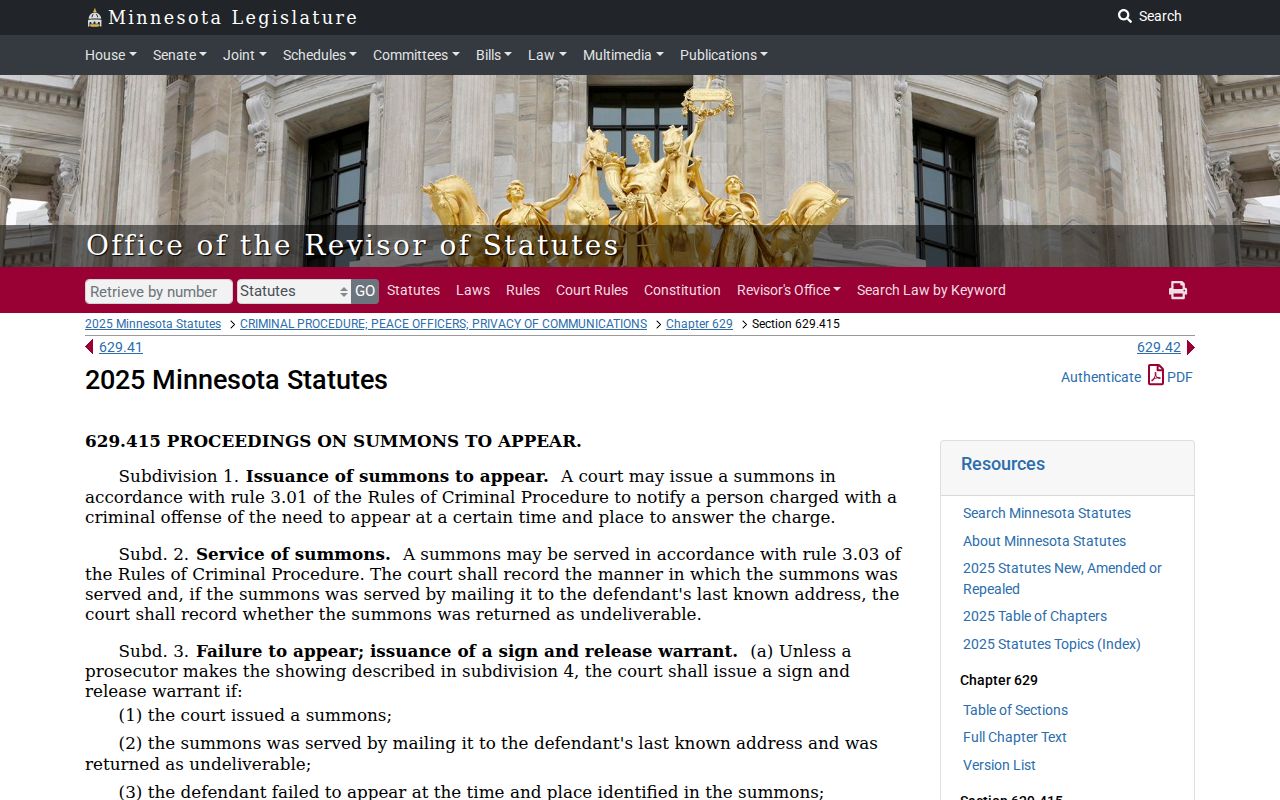
That statute is why the word warrant does not always mean arrest, even on a Freeborn County docket.
Key Rule: Sign-and-release applies only to qualifying cases, so never assume that a warrant label alone tells you what the order allows.
How Bench and Arrest Warrants Differ
The two orders come from different places. A bench warrant belongs to a case the person already had open in Freeborn County court. An arrest warrant, by contrast, usually follows a charging document in a new matter.
| Point | Bench Warrant | Arrest Warrant |
|---|---|---|
| Trigger | A missed date or unmet obligation | An offense supported by probable cause |
| Underlying case | One already open | A new or newly charged matter |
| Who issues it | The judge handling the case | A judge, on a charging document |
| How it clears | Appearance, recall, or another order | Service, surrender, or bond |
A missed date in a Freeborn County criminal case can still bring an arrest-related order. So read the file, not the shorthand.
The Freeborn County Warrant Calendar
Freeborn County posts its court calendar in the evening for the next day and refreshes it through the morning. Confidential matters are left out. So is anything not available remotely. Staff make one point clear: a missing name online does not mean an appearance was canceled. The printed calendars inside the courthouse are the current version.
Before You Act on a Freeborn Warrant
Walking into the courthouse to ask about a bench warrant carries risk. An active order can mean custody. A surprise arrest helps no family. A lawyer can request a new date, file a motion, or arrange an appearance with the Freeborn County court. The court contact page lists the public defender and Southern Minnesota Regional Legal Services as access points. Eligibility for either depends on the case.
Clearing a Bench Warrant in Freeborn County
Clearing a bench warrant means getting a judge to withdraw the order, and only a judge in Freeborn County can do that. A clerk can explain the process. A clerk cannot undo the warrant. The case record is searchable through Minnesota Court Records Online, where the warrant entry and any later recall appear.
- Confirm the warrant and the court that issued it.
- Call Court Administration at 507-668-6014 to ask what the court requires next.
- Talk with a lawyer about a motion, a new date, or an appearance.
- Resolve the underlying obligation, whether that is a payment, a condition, or a missed hearing.
- Ask for written confirmation that the warrant was recalled or inactivated.
Caution: A bench warrant does not expire on its own, and an unpaid obligation can keep one open for years.
Freeborn County Warrant Recall Entries
The file shows the change, and the wording matters more than the label.
| Court and Case Number | The district court file the warrant belongs to |
|---|---|
| Triggering Event | The missed appearance or compliance problem |
| Warrant Type | Bench, sign-and-release, or arrest-related wording |
| Issue Date | The date the judge entered the order |
| Status | Active, recalled, quashed, served, or another official status |
| Next Step | A new appearance date, release terms, or a court direction |
A follow-up document or docket entry is the proof worth keeping.
Freeborn County Courts That Issue Bench Warrants
One court issues these orders for Freeborn County cases. Minnesota keeps it that way. There is no separate city or justice-of-the-peace trial court here, so ordinance and traffic matters filed by a city land in the same district court. A citation from Alden and a charge from Albert Lea can sit in one building. The Freeborn County District Court page lists the courthouse address, hours, and contact details. Want to know which case holds the order? Run a Freeborn County warrant check to trace it.
Freeborn County Bench Warrants From Citations
A citation written in Clarks Grove does not stay in the city. Nor does one from Geneva. Both are filed in district court. The case then follows the same rules as one that starts in Albert Lea. Miss a date, and a bench warrant follows from the same Freeborn County court. The city office cannot recall it; city staff keep city records, not judicial orders.